24 November 2026 | St Albans, UK [Joe Philpott]
A century after its construction, the Adventist church at Ingólfsstræti 19 in Reykjavík, Iceland, marked its anniversary with a day combining mission training, music, and baptisms. On Sabbath, 10 October 2026, the historic building hosted the Adventist World Radio (AWR) Mission School graduation in the morning, followed by centenary celebrations in the afternoon.
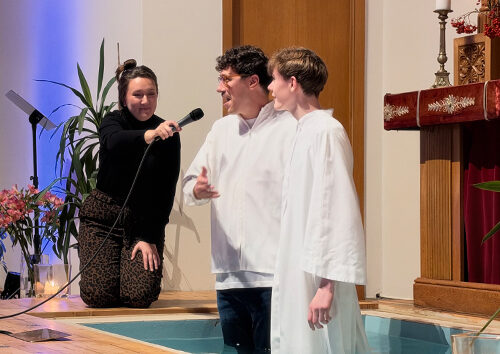
Under the theme “Relevant Then, Relevant Now”, the anniversary linked the congregation’s history to its ongoing role in the city. Civil and religious representatives joined the celebrations, while an evening programme organised by the Shuv Adventist church plant included the baptism of two young Icelanders.
“A hundred-year-old church building can easily become a monument to the past. This weekend was the opposite,” said Ivo Käsk, Iceland Conference (IC) president.
“The same building that has served Reykjavík for a century was filled with children, choirs, community groups, families, and young people committing their lives to Christ. That is what ‘Relevant Then, Relevant Now’ means to me.”
Three weeks of learning and outreach
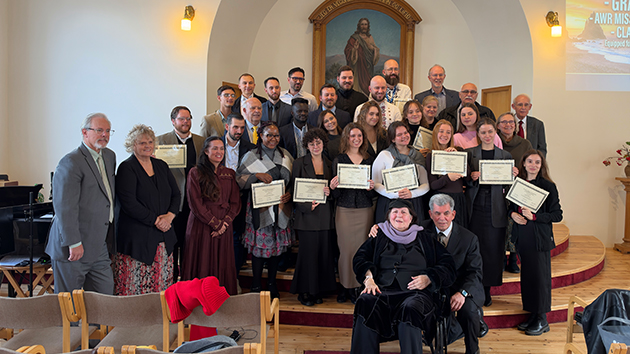
The morning graduation marked the end of the AWR Mission School held from 21 September to 10 October. Training took place at Hlíðardalsskóli, with students spending mornings in the classroom before participating in afternoon outreach.
The programme brought together an international group of 25 participants from countries including Norway, the United States, Bulgaria and Ukraine. Louis Torres was the main speaker, joined by other teachers, including John Davidson, Neville Neveling and Dick Hoey.
Alongside the training, an evening evangelistic series ran through much of the three weeks at the Adventist church in Hafnarfjörður. Torres presented subjects drawn from the Church’s fundamental beliefs, with quizzes inviting attendees to reflect on the previous evening’s presentation.
During the final evening meeting on 9 October, Kristján Sigurðsson, an elder of the Hafnarfjörður Adventist Church, presented gifts to Torres, AWR staff and the students on behalf of the congregation. Expressing their appreciation, he described the Mission School as a “boost” to the church’s evangelistic efforts.
At the graduation the following morning, Torres preached from Luke 15, reflecting on the lost sheep, lost coin and lost son, and God’s love for his lost children. The service also included the rebaptism of Eunice, a Mission School student from Norway, conducted by Neveling.
“I need to start a new chapter”
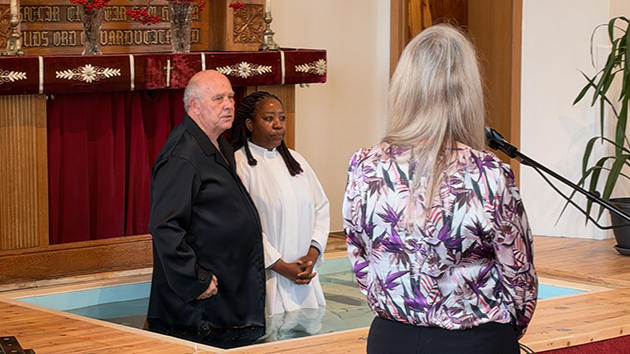
For Eunice, attending the school had initially seemed impossible. When her pastor first mentioned it, she believed she lacked both the time and the money. Extra work and leave arrangements eventually let her attend, which she understood as an answer to prayer.
She had wanted to deepen her relationship with God and learn how to share her faith. “I wanted to share the word of God with people, but I didn’t know how,” she said.
During the Mission School, Bible study resources and practical outreach helped her learn how to start conversations, explain her beliefs, and respond honestly when she didn’t know an answer.
The experience was also very personal. Eunice described struggling to forgive people who had hurt her. One evening, when Torres’ computer failed, he changed his presentation and instead spoke about forgiveness. She felt the message addressed the very issue she had been praying about. She decided to forgive and seek reconciliation, describing the experience as a heavy burden lifting from her shoulders.
Rebaptism had not been part of her plans. But after witnessing another woman’s rebaptism and hearing an invitation to make a fresh commitment, she responded. “I need to start a new chapter,” she recalled.
By the end of the programme, she was looking forward to putting her learning into practice at home. Speaking about her experience of door-to-door outreach, she said: “Now I see myself as an evangelist.”
A congregation older than its building
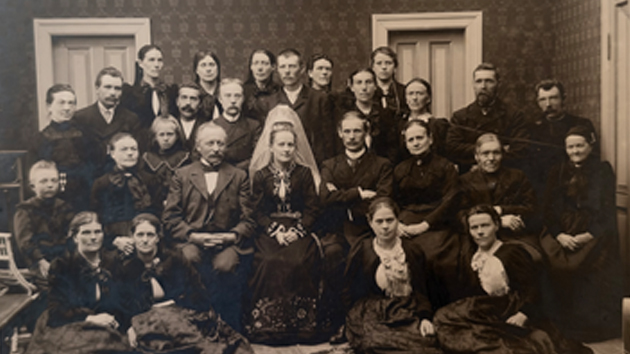
The afternoon anniversary marked 100 years of the building, as well as 120 years since the Reykjavík congregation was organised in 1906.
The Adventist Church’s mission efforts in Iceland, though, began a few years earlier. Swedish missionary David Östlund arrived in 1897, with publishing and education becoming important parts of the developing church’s activities. The congregation’s first building, erected in 1905, burned down in 1910 and was later rebuilt.
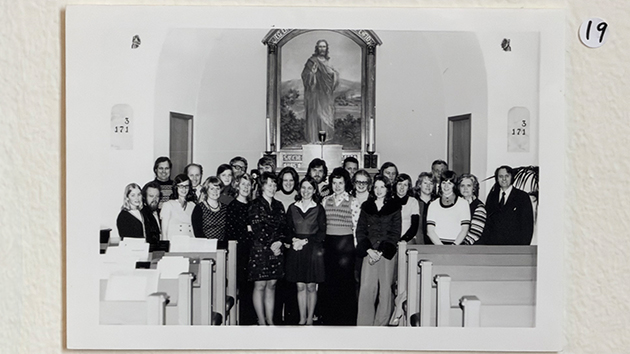
The church at Ingólfsstræti 19 followed in 1926, designed by Swedish architect Valdemar Johansson. A photo exhibition guide prepared for the centenary traces how the building became a place of worship, a printing house, and a place that nurtured young people and its local community.
Around 1930, printing activity resumed in the basement. Prentsmiðja Geislans produced Adventist publications, connecting the congregation with readers beyond the capital.
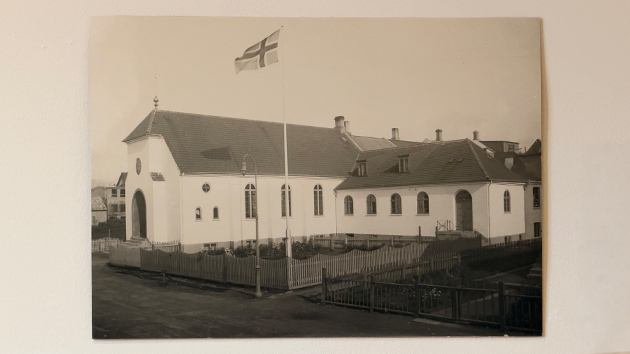
The press remained active over several decades. English printer Reg Burgess worked there for several years after 1960, and Icelandic printers followed in later years. The building was both a place of worship and a workplace from which publications travelled across the country.
Young people gathered for meetings and summer camps, children attended Sabbath School, and music brought the congregation together. During the 1950s, youth activities linked to Hlíðardalsskóli helped shape congregational life, as music and choirs flourished and the church grew.
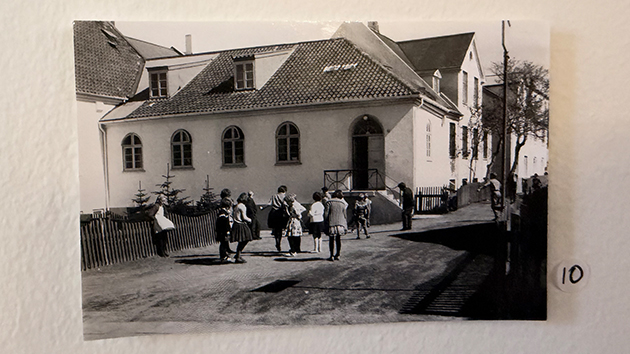
The women’s association, Alfa, organised and funded community work, including sending clothing to Greenland and mainland Europe. Photographs displayed in the Church for the anniversary include children playing outside the church in 1952, baptisms, choirs and gatherings across successive decades.
The building itself required continuing care. In the 1980s, Erling Panduro came from Denmark to lay new roof tiles. Around 1990, the Iceland Conference office moved to Suðurhlíð 36, while worship continued at Ingólfsstræti.
A building shared with the city
The centenary concert reflected relationships built through the wider community’s use of the building. Performers included Kliður, which rehearses at the church every week, and Kyrja and Yrkja, which hire it for concerts and events.
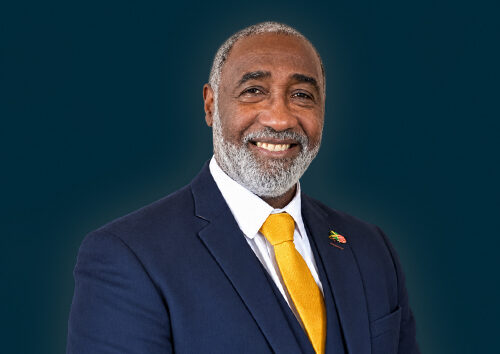
Björg Magnúsdóttir, president of Reykjavík City Council, attended and delivered a greeting. Written messages came from Guðrún Karls Helgudóttir, Bishop of Iceland in the Lutheran Church, and Halla Tómasdóttir, President of Iceland. Clergy and representatives of other Christian churches also attended.
Beyond worship and music, the building hosts a weekly soup kitchen, a charity shop, language classes, and Alcoholics Anonymous groups. These activities developed as the neighbourhood and congregation changed.
Today, the congregation brings together people of several nationalities, and its community activities provide additional ways for people to use the building and meet one another.
Lessons for the next century
For Eric Guðmundsson, a former IC president, the church’s history offers a lesson about its future: its strongest periods have come when it has looked beyond its own membership and contributed to the well-being of society.
In written reflections for this article, he pointed to early publishing, education and practical service as examples of work that benefited people regardless of whether they became Adventists.
He also recalled the role of Hlíðardalsskóli, where students from Adventist families studied alongside increasing numbers from other religious backgrounds. In his account, the school became an important place for young people to encounter Jesus and choose to be baptised.
That educational connection was also evident during the anniversary weekend. In Shuv’s evening service, Gustavo Ferrelli baptised two young Icelanders who had become acquainted with the Adventist Church through Suðurhlíðarskóli. Four more young people came forward, expressing their desire to be baptised.
“The greatest opportunity we have as a church is to be open and receptive to everyone without prejudice and to share the love of Christ and the message of his second coming freely,” Guðmundsson said.
[Featured image: Gustavo Ferrelli baptises one of two young Icelanders during the evening service organised by the Shuv Adventist church plant. Photos by Joe Philpott]