13 August 2026 | Valencia, Spain [João Relić Macedo]
I am not the first or only person to fall in love at the European Adventist Youth Congress (AYC). Many of the speakers and participants at AYC 2026 alluded to the trope last week in Valencia, Spain. Some of them shared how they found the love of their lives during a youth congress decades ago. Others hoped to do so during AYC 2026 or at a future congress. I can relate, as the love story between my wife and I has an important chapter that involves AYC 2017, which was also held in Valencia, Spain.
This, however, is not the type of “falling in love” I had in mind when writing this article’s title. At AYC 2026, I fell in love with a whole generation of young people. A generation whose faith struck me as genuine and less encumbered by some of the issues that plagued past generations. A generation that genuinely amazed me and gave me hope for the future of our Church in Europe.
A bit of context may come in handy here. I have been closely involved with youth ministries in various European contexts over the past two decades: I was a youth leader in my home church in Portugal, a Campus Ministries leader at Newbold College of Higher Education, and I’ve remained closely involved with youth ministries at local, conference and union levels throughout my ministry in Portugal, Croatia and the United Kingdom. And yet, what I experienced at AYC 2026 managed to surprise me.
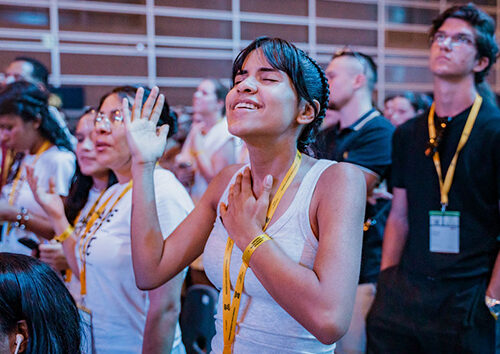
What I saw was a new generation of young people who seemed genuinely keen to attend all the worship services, the early-morning devotionals, and the prayer meet-ups. They sang the songs wholeheartedly and with a passion that I’ve seldom encountered before in events of this type. They also seemed equally comfortable with the varied musical genres showcased by the different international worship teams.
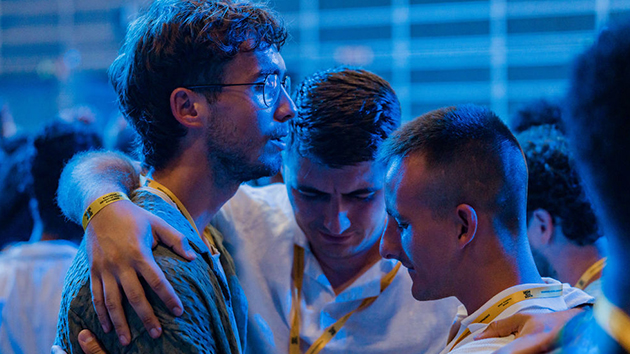
In addition to this, they didn’t seem as preoccupied with the same types of “controversial” topics that previous generations fought so ardently about, such as worship styles, sexuality, and the ordination of women. Among the young people I interacted with in Valencia, debates over those topics seemed far less central, perhaps even fading. Instead, this generation seemed slow to judge and quick to pitch a tent wide enough for everyone.
All of this made me wonder throughout the Congress: Could I be witnessing something of the so-called “quiet revival” that some Christian sources had been touting for the last couple of years, even though the research behind that claim has since been retracted?1
None of this is necessarily surprising, as it seems to echo some of the findings from studies of Generation Z. A 2024 Barna Group report revealed that the vast majority of Gen Z are open to God and spiritual matters, even as they remain reticent to fully embrace organised religion.2 This generational openness to spirituality can be seen even among those of no faith: one in four admits to having prayed to God at least once in the last seven days.3 Moreover, despite being the most technologically literate generation, a large majority of Gen Z said they preferred in-person relationships, such as those they can experience at AYC, to online ones.4 No wonder they seemed so eager to attend the in-person worship services every morning and evening.
Studies have also shown that Gen Z is “the most diverse generation yet”.5 They also seem to be among the most inclusive,6 with researchers referring to them as “the open generation”.7 The statistics for Christian Gen Zers are slightly different, though. They indicate greater adherence to traditional Christian teachings on topics like sexuality and gender.8
Nonetheless, one characteristic of Gen Z seems clear: as one researcher puts it, “they are quite comfortable believing one thing and respecting and embracing others who believe something different”.9 No wonder that, in Valencia, many of the young people I encountered seemed more interested in making room for those who were different from them than in judging them.
Now, don’t get me wrong, I haven’t fallen in love so much that I’m not able to see some of the challenging aspects of this generation. I’m also able to see how those challenges could have a tangible impact on our Church’s future. Those of you who have watched the Netflix documentary Louis Theroux: Inside the Manosphere are likely aware of the social-media-fuelled hatred of women that has taken hold among some young men.10 I often wonder how this might affect the lives and ministries of the next generation of female pastors now emerging from our seminaries.
Furthermore, researchers have noted that over the past five years, some young men and women across Europe have moved away from the so-called “established” political parties and towards the far-right.11 This trend may be easier to understand when we consider that Gen Zers are also described as the most anxious of all generations, struggling to navigate a number of internal and external pressures and often feeling that they have been left behind.12 Even if this is understandable, I find it a worrying development. At a time when our Church in Europe is becoming increasingly multicultural, I wonder how this generation’s political viewpoints may affect the lives of those sitting in our pews.

One last concern I’ve had for some time is biblical literacy. Despite this generation’s openness to God and spiritual matters, it seems to me that some Gen Zers lack familiarity with basic biblical knowledge. Yes, Bible reading appears to be on the rise among younger generations,13 but biblical literacy seems to remain low.14 This is a trend I have noticed throughout my ministry, and I think I may have also observed during AYC 2026 in Valencia.
Just to be clear, I don’t mean to suggest that this necessarily reflects a lack of faith or that this generation values emotions above reason and knowledge.15 However, it was slightly surprising to me that, during AYC 2026’s closing session, one of the main speakers invited the congregation to join in reciting the Lord’s Prayer, only to be met with hesitant attempts by some of the young people in the room.
And yet, I remain hopeful for the future of the Church as Gen Z takes on an increasingly significant role within it. I do so because what I saw at AYC 2026 was deeply encouraging. This generation’s noticeable passion for God will continue to create opportunities for them to learn more about Jesus and the Bible. Their instinct to make people feel included gives me hope that they can resist the pitfalls of hate and discrimination. Their ability to respect and embrace those who think differently from them may help create church communities where anyone feels able to approach God.
This is where, I think, the rest of the Church may have a role to play. What I saw in Valencia was a generation of young people with a strong passion for Jesus who are waiting for a chance to take the lead. Some of them would like to start new projects aimed specifically at reaching other Gen Zers. Others would simply be content to take over a department in their local church. It is up to us to empower them to do so, and to mentor them in the process.
Who knows? Maybe, if we do so, the Church they will help shape will come a few steps closer to the community envisioned by the author of Hebrews: a community where everyone can approach “with a true heart in full assurance of faith, with [their] hearts sprinkled clean from an evil conscience and [their] bodies washed with pure water” (Hebrews 10:22, NRSVue).
At AYC 2026, I fell in love with a whole generation of young people. I’m looking forward to seeing what they do in the future.
References
1 “The Quiet Revival” was the title of an April 2025 report commissioned by the Bible Society. The report argued that, from 2018 to 2024, church attendance among 18- to 34-year-olds more than tripled. The YouGov survey data on which the report was based was later found to be flawed, and consequently, the Bible Society retracted the study in March 2026. See Conrad Hackett, “Has There Been a Christian Revival Among Young Adults in the U.K.? Recent Surveys May Be Misleading,” Pew Research Centre, 23 January 2026; Catherine Wyatt, “We Thought Gen Z Had Started Going to Church in Droves. But the Truth Is More Complicated,” BBC News, 22 February 2026.
2 See Barna Group, Gen Z, Vol. 3: Tracking the Changing Beliefs, Values & Attitudes of a Generation Coming of Age (Ventura, CA: Barna Group, 2024), p. 15.
3 See Barna Group, Gen Z, Vol. 3, p. 13.
4 See Barna Group, Gen Z, Vol. 3, pp. 70–71.
5 Barna Group, Gen Z, Vol. 3, p. 14. Although the Barna Group study focuses primarily on the United States, similar trends are also evident in the United Kingdom. See Catalina Espinosa, “Generation Z in the UK: Statistics & Facts,” Statista, 17 December 2025.
6 For example, their attitudes towards sexual and gender minorities are much more open than those of previous generations. See Barna Group, Gen Z, Vol. 3, pp. 30–35. See also Barna Group, Gen Z, Vol. 1: The Culture, Beliefs and Motivations Shaping the Next Generation (Ventura, CA: Barna Group, 2018), pp. 46–49.
7 Barna Group, Gen Z, Vol. 3, p. 17.
8 See Barna Group, Gen Z, Vol. 1, pp. 30–35; Barna Group, Gen Z, Vol. 3, pp. 30–35.
9 David Kinnaman, “Discipling Gen Z on Gender & Sexuality”, in Barna Group, Gen Z, Vol. 3, p. 36.
10 Adrian Choa, dir., Louis Theroux: Inside the Manosphere (Netflix, 2026).
11 See Matt Lynes, “From Generation Greta to the Bande de Bardella: Why Europe’s Youth Are Shifting Political Loyalties,” The Parliament, 13 January 2025.
12 See, for instance, Jeanine Connor, “The Big Issue: The Truth About ‘Generation Anxiety’,” BACP – Therapy Today, July/August 2024; Barna Group, Gen Z, Vol. 2: Caring for Young Souls and Cultivating Resilience (Ventura, CA: Barna Group, 2021), pp. 9–11.
13 See Sinéad Campbell, “‘It’s Younger People Seeking Some Sort of Spirituality’: UK Bible Sales Reach Record High,” The Guardian, 10 January 2026. See also Barna Group, “How Millennials and Gen Z Are Driving a Bible Reading Comeback,” Barna Group, 6 November 2025.
14 See Barna Group, Gen Z, Vol. 1, pp. 24-26
15 As Kärt Lazić reminded Congress participants in her workshop entitled “The Polarised People of God? The Curious Case of Unchecked Dichotomous Pairs in Communal Worship”, the “Emotions v. Knowledge” dichotomy is a flawed one.
[Photos: Simão de Abreu]