
6 October 2026 | St Albans, UK [David Neal]
This Sabbath, 10 October, is Pastor Appreciation Day. It’s an opportunity for congregations to recognise their pastors and their families, pray for them, and thank them for their faithful ministry.
Eugene Peterson, in his memoir The Pastor, asks these questions:
“How do I, as a pastor, prevent myself from thinking of my work as a job that I get paid for, a job that is assigned to me by my denomination, a job that I am expected to do to the satisfaction of my congregation? How do I stay attentive to and listening to the call that got me started in this way of life – not a call to make the church attractive and useful in the American scene [or we can add – the European scene], not a call to help people feel good about themselves, and have a good life, not a call to use my considerable gifts to fulfil myself, but a call like Abraham’s ‘to set out for a place… not knowing where he was going’, a call to deny myself and take up my cross and follow Jesus, a call like Jonah’s to ‘go at once to Nineveh’, a city he detested, a call like Paul’s to ‘get up and enter the city and you will be told what to do’?”
The pastors I know who serve with excellence wrestle with the same or similar questions. Spend a decade or more in pastoral ministry in the Trans-European Division (TED), and much of what Peterson describes will feel familiar. From the enthusiasm and idealism of the early years, through the challenges of balancing family life and ministry, to the autumn years of life, the question of calling remains: Have I made the difference in the lives of members and the community that I hoped I could?
Across the TED, women and men serve as pastors in a wide variety of ethnic and cultural contexts, most in small congregations. Increasingly, they serve in a congregational culture different from their own. Many thrive, some struggle to keep going, and others leave ministry because the burden has become too heavy.
What makes a good pastor?
Peterson’s questions offer much to reflect on. I could list the qualities here, but instead, can I invite you to read his words again? What do you discover? Where do you see those qualities in your pastor?
In the following paragraph, Peterson continues to question himself. I confess that at times in my own ministry, I have wrestled with these questions too:
“How do I keep the immediacy and authority of God’s call in my ears when an entire culture, both secular and ecclesial, is giving me a job description? How do I keep the calling, the vocation, of pastor from being drowned out by job descriptions, gussied up [dressed up] in glossy challenges and visions and strategies, clamouring incessantly for my attention?”
From my experience of pastoral ministry in the local church, some of the most joy-filled moments come when I see John or Jane express a desire to grow deeper in Christ’s love and allow it to shape their everyday life. That love becomes visible as they reach out to others with compassion. To see this happen is one of the great joys of ministry.
And from the member’s perspective, what is my most treasured experience with a pastor? Is it thoughtful, in-depth, yet down-to-earth preaching? Yes, that matters. Is it the ability to lead the church forward in mission? Yes, that matters too.
But what I treasure most is that, when my world turned upside down through financial difficulty, emotional distress, relationship struggles or ill health, my pastor walked with me. Listening, supporting, praying, encouraging and helping me to see hope when I struggled to find it. My pastor was there. And in those moments, that presence meant everything.
Perhaps that is something worth remembering on Pastor Appreciation Day. Pastoral ministry is more than a job description. At its heart, it is a calling to follow Jesus faithfully and to help others grow more deeply in His love. So this Sabbath, take time to recognise that calling in your pastor. Thank them for the ways they serve, encourage them in the work God has entrusted to them, pray for them and their family, and remind them that their ministry is seen, valued and appreciated.
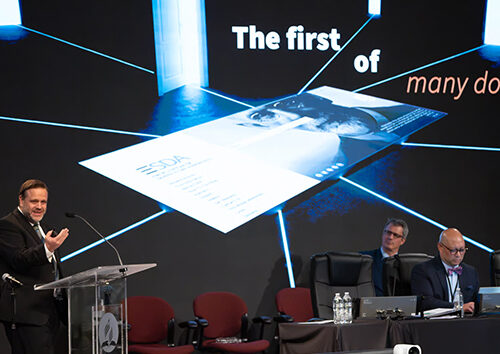
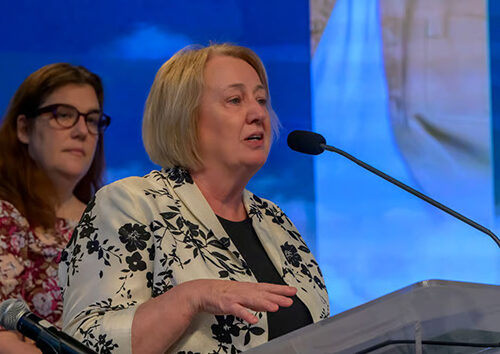
[Photo: Pastors serving in different parts of the Trans-European Division. Top left, bottom left, bottom centre and bottom right by Tor Tjeransen; top centre by Jim Botha; top right by Brent Hardinge / Adventist Media Exchange (CC BY 4.0)]
Peterson, Eugene H. The Pastor: A Memoir. New York: HarperOne, 2011, p. 165. Both quotations are from page 165.