30 June 2026 | Bracknell, UK [David Trim]
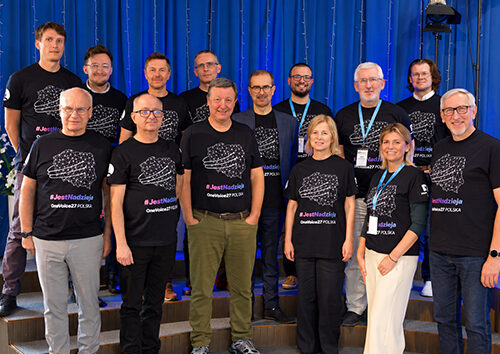
For 125 years, Newbold College of Higher Education has carried different names and occupied different locations, but its purpose has remained remarkably consistent: to prepare men and women to share the gospel with the world.
That commitment to mission has shaped generations of pastors, teachers, administrators and missionaries. Some served in the British Isles, others travelled to Africa, the Middle East and beyond. During Newbold’s 125th anniversary weekend, I reflected on just a few of the many stories of sacrifice and service that have emerged from the College’s history. While many of those names have faded from memory, their legacy continues to shape the Seventh-day Adventist Church today.
From Duncombe Hall to Overseas Mission
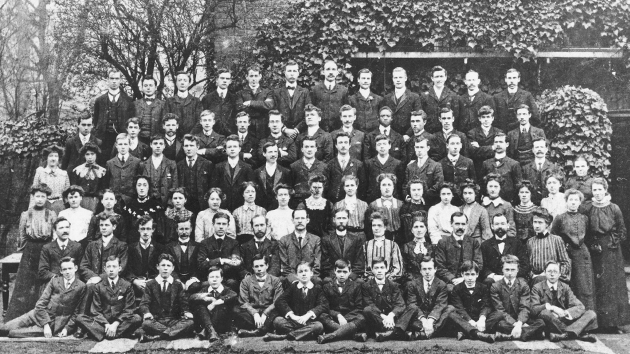
When Duncombe Hall College opened in north London in 1901, it was established to train workers for the British Mission. The following year, the British Union Conference (BUC) was organised, and the College became the training ground for workers serving the new union. By 1904, it had become Duncombe Hall Missionary College, reflecting its growing emphasis on preparing gospel workers.
At that time, Britain itself was very much a mission field. The BUC had just 41 congregations with a membership of 1,364 among a population of approximately 42 million, roughly one Adventist for every 30,000 people. The challenge before the young church was immense. Yet even while the work in Britain remained in its infancy, church leaders looked beyond their own shores, convinced that preparing workers for mission was central to the College’s purpose.
That vision soon became reality.
The BUC’s first overseas missionary venture began in 1906 when Arthur Carscallen, a Canadian trained at Duncombe Hall, travelled to British East Africa and established a mission station at Gendia, in present-day Kenya. East Africa soon became part of the BUC’s missionary responsibility, and from that point onwards the College trained workers not only for service in Britain but also for overseas mission, particularly across the African continent.
The early College itself reflected both its modest beginnings and its ambitious vision. In 1904, the entire College community numbered just 84 students and staff, representing more than six per cent of the Adventist membership across the British Isles. Among those students was the first black student to study at the College, a reminder that even in its earliest years, Newbold was beginning to reflect the global nature of the Church it served.
George Keough and Mission in Egypt
One of those students was George Keough.
An Irishman who had long dreamed of becoming a missionary after reading about David Livingstone as a boy, Keough completed his studies in 1906. After a short period of pastoral ministry in Britain, he and his wife, Mary Ann, accepted a call to Egypt in 1908.
What followed would become one of the most remarkable missionary stories to emerge from Newbold’s history.
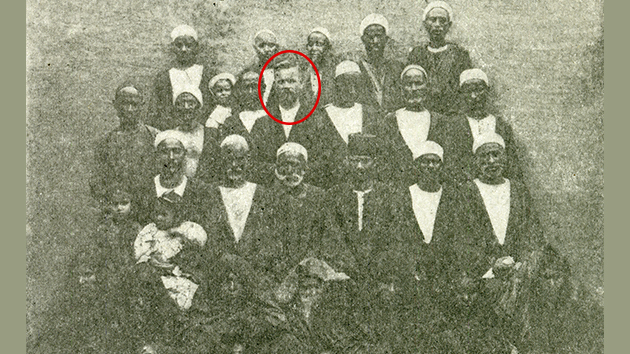
Soon after arriving, Keough recognised that the Adventist work in Egypt focused largely on expatriate communities, with little expectation that local people could be reached. When he asked when he would begin learning Arabic, he was advised that there was no need. Church leaders believed there was little prospect of reaching Egyptians with the Adventist message.
Keough thought differently.
He learned Arabic anyway because he believed genuine mission required understanding people before attempting to reach them. He wanted to speak with local people in their own language, understand their culture and discover whether the gospel could truly take root among them.
In 1911, the Keough family moved from Cairo to Upper Egypt, settling first in Asyut before relocating to the village of Beni Adi. It was an extraordinary decision. Few Europeans lived there, and even fewer chose to make their home among the local community. The family exchanged the relative familiarity of Cairo for life in a rural Egyptian village, where isolation and hardship became part of everyday life.
Rather than remaining separate, Keough immersed himself in village life. He entered homes built of mud brick, sat on dirt floors, accepted the hospitality offered to him and ate whatever his hosts placed before him, even when it challenged his own tastes. One story remembered for generations tells of him willingly sharing fermented cheese despite the worms visible within it. By accepting what was offered, he honoured the hospitality of those who welcomed him.
His friendships were genuine rather than strategic. Because he respected the culture and the people among whom he served, they trusted him. He embodied Christ long before he spoke about Christ.
Between late 1912 and mid-1913, Keough baptised 25 people in Beni Adi, more than doubling the membership of the Adventist Church in Egypt. His work expanded into neighbouring villages, and the growth continued in the years that followed. When European Division president Ludwig Conradi later visited Egypt, he described the results of Keough’s ministry as “Pentecostal”.
More than a century later, Adventist families in Beni Adi still recounted stories passed down through generations of the European missionary who spoke their language, entered their homes and treated them with dignity. His influence endured not because of programmes or institutions, but because people recognised the authenticity of his Christian witness.
Keough’s ministry reflected a principle that generations of Newbold graduates would continue to carry into mission fields across the world.
A Changing College with an Unchanged Purpose
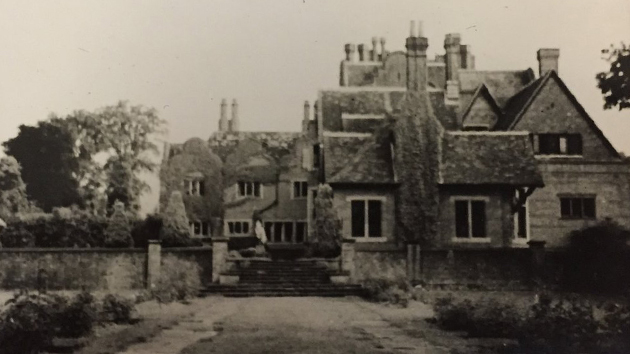
As the College itself evolved, its commitment to mission never changed. In 1907, it relocated to Stanborough Park in Watford, becoming Stanborough Park Missionary College. Later, it became Stanborough Missionary College, then Stanborough College. In 1931, it moved to Newbold Revel in the Midlands of England, adopting the name Newbold Missionary College, before finally relocating to its present home in Binfield, Berkshire, in 1946.
The names changed. The campuses changed. The mission did not.
The impact of that purpose became increasingly evident during the first half of the twentieth century.
Between 1907 and 1927, 64 missionaries from the British Isles entered overseas service, the majority of whom had studied at the College. During the 1920s, Britain sent missionaries at a higher rate relative to its church membership than the global Adventist average. For a comparatively small church, it was a remarkable contribution, demonstrating the missionary vision that had become deeply embedded in both the BUC and its College.
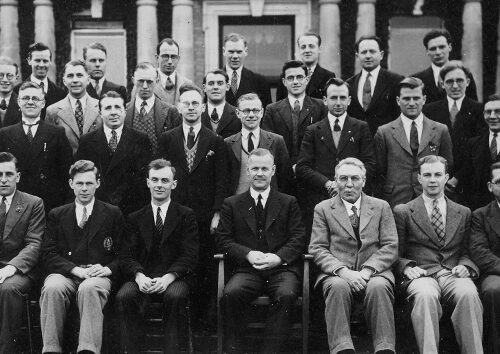
Keough himself returned to Newbold in 1929 as a lecturer before teaching another generation of students in the 1950s. Students remembered not only his knowledge but also his ability to connect with young people. Having spent decades living cross-culturally, he challenged students to think beyond geography and to understand mission as building genuine relationships with those they served.
Lives of Faithful Service
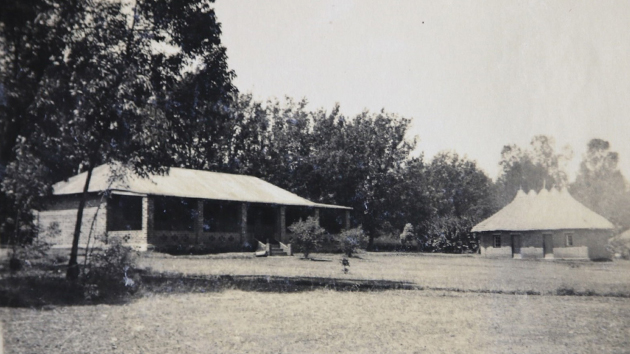
Grace Clark, another Newbold alumna, arrived in Kenya in 1921 and established the region’s first girls’ schools at Kamagambo. At a time when educating girls was uncommon, she patiently encouraged families to send their daughters to school. She later helped establish another girls’ school, translated Adventist materials into local languages and contributed to Bible translation work. She devoted 34 years of her life to mission in Kenya, where she became known for her compassion, generosity and commitment to education.
Others followed similar paths.
Jesse and Katie Clifford pioneered Adventist work in Nigeria and Ghana. William and Mary-Anne McClements spent more than three decades opening new mission territories in West Africa. George and Vera Madgwick established hospitals that transformed medical ministry in East, West and Southern Africa. Countless others served in education, healthcare, administration and pastoral ministry, often giving decades of their lives to communities far from home.
Their stories differed, but their motivation was remarkably similar. They understood mission not simply as travelling to another country, but as dedicating their lives to serving others wherever God called them.
Together, they demonstrated that Newbold’s greatest contribution was never measured simply by the number of graduates it produced, but by the lives those graduates touched.
The Wider Impact
Their collective impact was substantial.
In 1928, when the Northern European Division was created and given responsibility for the East African Union Mission and West African Union Mission, church membership across those territories stood at just 3,372. By the end of the Second World War, it had grown to more than 20,000.
The story continued after Newbold moved to Binfield.
In 1950, the College became a “senior college” and, for the first time, the training institution not only for Britain but also for the Northern European Division and its mission territories in West Africa. Students now came from across Northern Europe, preparing together for service in Africa and elsewhere. Newbold increasingly became an international College serving an international church.
By 1970, membership in the division’s African mission territories had grown to almost 60,000, representing more than half of the Division’s total membership. A decade later, membership in West Africa alone had almost doubled again. Those figures reflected the work of many people, including generations of Newbold graduates whose influence reached far beyond the College itself.
Statistics, however, tell only part of the story.
Newbold’s Enduring Legacy
Newbold’s legacy is best seen in the lives of those who answered God’s call to serve. Across generations, its graduates carried the gospel into unfamiliar cultures, learned new languages, established schools and hospitals, translated the Bible and Christian literature, and built relationships that reflected Christ’s love long before they preached it.
As Newbold marks 125 years, its history is about far more than buildings, campuses or changing names. It is the story of a College that consistently prepared men and women for mission, equipping them to serve wherever God called them.
The names of many of those missionaries may no longer be widely remembered, but their influence continues in the churches, schools, hospitals and communities they helped establish. Their work reminds us that the impact of Adventist education is not measured only in lecture halls but also in the countless acts of faithful service carried out by graduates around the world.
That is Newbold’s mission legacy.
Dr David Trim serves as Director of the Office of Archives, Statistics, and Research at the General Conference of Seventh-day Adventists. This article is adapted from a presentation delivered during the 125th Anniversary Weekend of Newbold College of Higher Education, held 26–28 June 2026.
[Featured image: George Keough with Newbold’s mission band at Newbold Revel in 1934. Photos courtesy of David Trim]