20 September 2026 | Maryland, USA [Wilfred Masih and Scottish Mission Communication Department with tedNEWS]
A Discipleship and Church Planting Weekend held in Dundee, Scotland, from 14–16 August explored how spiritual formation, sustainable leadership, hospitality and mission can help churches develop a disciple-making culture.
Held at the Invercarse Hotel as part of the Scottish Mission (SM) School of Discipleship and Evangelism, the weekend considered three central questions: How do churches make disciples in an increasingly secular and post-Christian society? How can leaders faithfully serve without becoming exhausted? And how might new communities of faith grow naturally from relationships, hospitality and everyday mission?
Guest speaker Sylvia Cariotoglou, Trans-European Division (TED) Director of the Adventist Mission, Evangelism and Church Growth, led attendees through the weekend’s teaching and discussions. More than 50 people attended the main programme on Saturday.
Rather than treating church planting simply as the launch of a new congregation, the weekend began further upstream: with disciples who are being formed by Christ, learning to live missionally and creating spaces where others can belong, grow and encounter Him.
The opening evening explored the question: Why discipleship and church planting now? Participants were encouraged to see discipleship as central to mission, with church planting as one possible fruits of a healthy disciple-making culture. Cariotoglou’s opening session, “Making Space: Five Principles for Welcoming, Discipling and Growing People”, focused particularly on those who remain on the fringes of a church, including people who are new, returning, exploring Christianity or feeling disconnected.
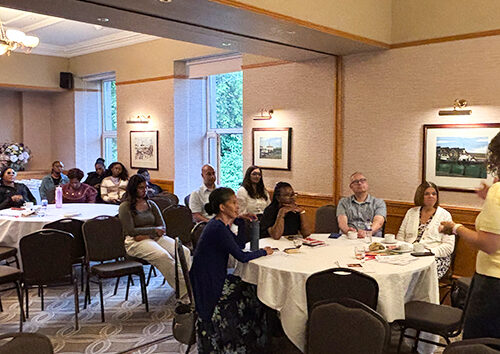
Table groups were invited to wrestle with a deceptively simple question: Who are we not making enough space for? That question became one of the recurring themes of the weekend.
Formed Before We Are Sent
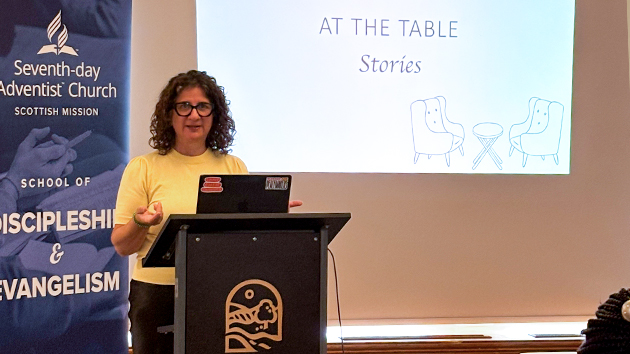
Saturday shifted the focus beneath the visible activity of mission to the spiritual life of the disciple. In the “Spiritual Formation and the Life of the Disciple” workshop, participants reflected on the conviction that before Christians lead in mission, they must be continually shaped by Christ themselves. Discipleship was presented not merely as the transfer of biblical information but as a transformation affecting the inner life, character, and spiritual rhythms of the believer.
This naturally led to the question of sustainability. A workshop on avoiding burnout in ministry and mission explored the difference between faithful service and over-functioning, with rest, prayer, boundaries and shared leadership presented as essential to sustainable, long-term mission. Participants were also given space for honest reflection on weariness, responsibility and the burdens they carry.
The morning sessions emphasised that the goal of mission is not to create increasingly exhausted leaders, but healthier disciples who can contribute to healthier churches.
Storytelling was another important theme. Participants considered how personal testimony can encourage faith and help Christians communicate what God is doing in their lives and communities.
The day’s teaching culminated in a focus on spiritual leadership, exploring what it means for elders, personal ministries leaders, sabbath school leaders, small-group leaders and others to lead spiritually rather than merely organisationally.
Prayer around the tables then turned the teaching outward, as participants prayed for local churches, families, young adults, returning members, weary leaders, new discipleship groups and emerging church-planting opportunities.
For Borys and Mariia, the weekend reinforced the importance of an active and intentional faith, encouraging them not only to grow as disciples but also to help others grow in faith. “We found this meeting very relevant and timely,” they commented, highlighting both the call to become disciple-makers and the reminder to trust God’s presence rather than rely solely on their own strength.
From Discipleship Culture to Church Planting
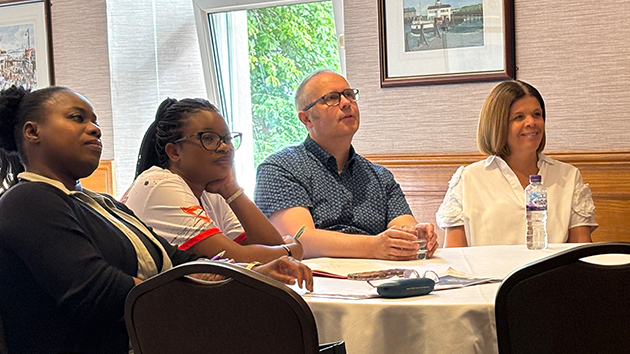
Sunday brought the different strands of the weekend together, including the theme “Savour”. Workshops explored the idea that church planting does not have to begin with a building, a programme or even a formal congregation. New faith communities can emerge from prayer, relationships, mission and local ownership. Small groups, house groups, discipleship communities and local initiatives can become places where people encounter Christ and grow together. Over time, some may develop into new churches.
From this perspective, church planting becomes less of an isolated specialist activity and more the natural fruit of a church already making disciples and living missionally.
Participants were also introduced to an interactive approach to Bible study that encourages people to place themselves within a biblical story, consider a particular character’s perspective, reflect on how they might have felt, and discuss those insights together. The approach offered one practical example of how Bible study might become more relational and participatory within small groups and emerging faith communities.
The weekend was also designed to move participants from reflection to practical action. Attendees were asked to identify practical priorities for the next 90 days: one area of discipleship that needs strengthening, people who need space to belong, a local mission opportunity to pursue, a possible new church to explore, and one concrete action to take.
The final session, “Commissioned to Make Space”, gathered the weekend’s themes together before participants were prayed over and commissioned to return to their local communities with practical next steps.
Making Space for What God May Grow
Across the three days, one thread connected everything: Formation. Sustainability. Hospitality. Mission. Church planting. Action. Together, the themes connected spiritual formation with practical mission and church planting.
The weekend concluded with a call for SM churches to become communities where people are not merely invited to attend, but are given space to belong, grow, serve and become disciples who make other disciples.
One attendee described Cariotoglou as “an amazing facilitator”, while another reflected: “The weekend was informative, challenging and encouraging. I was especially encouraged by the personal testimonies of the speaker and of others I was able to meet and network with.”
Pastor Wilfred Masih, who leads the SM School of Discipleship and Evangelism, said: “I believe the Scottish Mission is on the threshold of changing our culture of church attendance into discipleship and disciple-making, where each person who is part of a church community will recognise their calling to be a disciple-maker for Jesus.”
He continued, “I want to thank Sylvia Cariotoglou for her excellent, thought-provoking presentations throughout the weekend, as well as the Inverness singing group and the Ukrainian Adventist Choir for blessing us with their music ministry throughout the weekend.”
[Photos: Wilfred Masih]
The original version of this article was posted on the Scottish Mission website.