29 October 2026 | Budva, Montenegro [Joe Philpott]
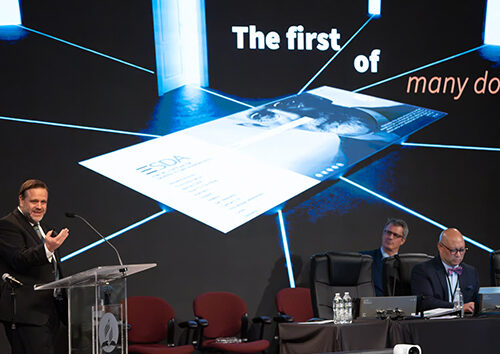
The value of the Seventh-day Adventist Church’s resources should be seen in the people equipped to serve, the congregations discovering new possibilities and the communities experiencing the gospel, Daniel Duda told leaders at the Trans-European Division (TED) Annual Council. The meetings are taking place from 28 October to 1 November in Budva, Montenegro.
Delivering his President’s Challenge under the theme “From Resources to Readiness”, Duda outlined five ways unions, conferences and missions could use training, events and funding more effectively to equip churches and leaders to meet the needs of the people they serve. He asked leaders to look beyond the resources they provide and consider what people can do as a result.
He illustrated the distinction through the story of John Kellogg, whose work helped to take breakfast cereal beyond the patients of a sanitarium into ordinary households. Duda explained that Kellogg’s success lay in helping people see how a product developed for sanitarium patients could become part of their own daily lives.
For the church, that means considering how its beliefs speak to people’s actual lives: how the Sabbath offers rest to an exhausted professional, Christian hope can encourage someone who sees little to look forward to, or how a church can offer friendship and practical support to someone living alone. However, Duda cautioned that sharing faith is different from selling cereal: the church can respond to people’s needs and invite them to explore faith, but it cannot create a desire for God.
1. From providing programmes to solving real mission problems
Duda’s first challenge concerned where ministry begins. We should start with what our fields and members are experiencing, letting those needs shape the support we offer.
Returning to a concern he raised in 2022, he questioned the practice of introducing programmes and initiatives, and then maintaining them regardless of their effectiveness. When they struggle, the response can become a search for more people to keep it running, without reconsidering whether it addresses the problem.
The proposed shift asks leaders to listen first, identify the mission challenge and develop a response that serves the people facing it. The usefulness of a programme and initiative would then be assessed through its contribution to that work.
2. From distributing information to developing people
Knowledge alone does not guarantee change, Duda cautioned. Training must also develop discernment, practical skills and the ability to minister through relationships. After a training event, leaders should ask whether participants have gained the skills and confidence to lead, serve, help others grow in faith or handle situations they previously found difficult. Learning should also give people confidence to try, reflect on mistakes and improve.
Duda linked this to spiritual growth. Participants should leave with a stronger sense that God can use them and with the ability to continue learning beyond the event. Repeated attendance at seminars, without changes in character or practice, falls short of that aim.
3. From standardisation to contextualisation
“A single model cannot automatically serve every European context,” Duda emphasised in his presentation. A resource developed for Britain may require adaptation for Albania, Iceland, Poland or Cyprus. Churches need to understand the people they hope to reach, including those with no Christian background or existing knowledge of the Adventist Church.
Duda distinguished flexibility in ministry from changes to the gospel itself. The same message can be shared through a public lecture, a personal conversation, a small group, a community project, a university dialogue or a digital platform. Each approach requires different skills and sensitivity to its setting.
Resources should therefore become locally owned and adapted, helping congregations offer meaningful ways for people to encounter Jesus.
4. From isolated events to learning communities
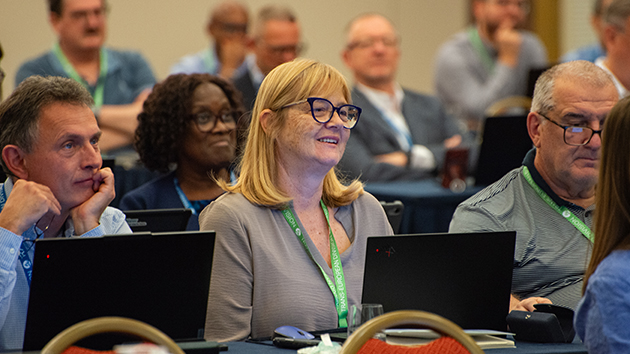
Large gatherings have a valuable place, Duda recognised, particularly for members of small churches who gain encouragement from meeting a wider community of believers. Their lasting significance, however, depends on what happens after participants return home. He challenged leaders to consider how these events help participants serve their congregations, teach their students and carry out their pastoral responsibilities.
His fourth shift called for participants to keep working together after events, support one another, test new approaches, and share what they learn across unions and fields. An approach developed in one territory could then inform and encourage work elsewhere.
Such relationships would help participants build on their initial inspiration, receive support as they put ideas into practice and share what they learn along the way.
5. From measuring activity to discerning fruit
Duda’s final pillar challenged the measures used to assess success. Participation, expenditure and the number of resources produced provide an incomplete picture of mission. He urged leaders to assess whether their work helps people build stronger relationships, lead more effectively, grow in faith, serve their communities and share the gospel.
A smaller project that equips new leaders or enables a church to reach a previously neglected community could be more valuable than a well-attended event with little lasting impact. For executive committees allocating substantial resources, this makes evaluation a matter of stewardship.
Duda concluded by inviting every union to identify one ministry challenge it wants to address over the next year. Unions could focus on reaching people online, training pastors, serving immigrant communities, preparing new leaders or helping different generations grow in faith. The lessons and results could then be reflected on in the following year’s union reports.
“Imagine if we became known not primarily for the programmes we provide, but for the people and communities we help flourish.”
[Photos: Joe Philpott]