
16 March 2026 | Belgrade, Serbia [Elizabeth Tomenko with tedNEWS]
A simulated flood scenario brought 24 participants from across Europe to Belgrade, Serbia, from February 2–6 2026, for the organisation’s Core Emergency Response Team training, designed to strengthen preparedness and coordination during humanitarian crises.
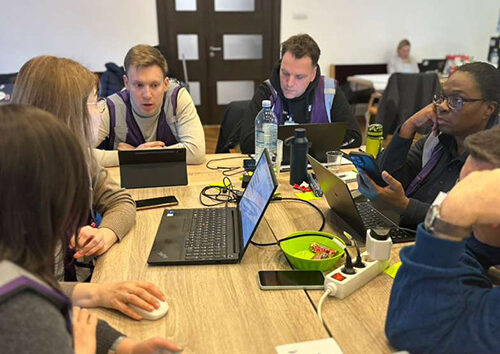
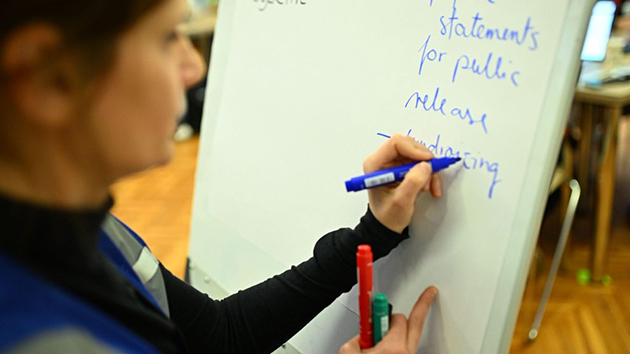
In a Belgrade classroom, ADRA staff in matching blue vests leaned over a flip chart, sketching out an emergency response management plan, a volunteer appreciation plan, and an emergency communications strategy, while other teams worked on similar tasks. Only days earlier, many of the participants had been strangers, but they quickly formed coordinated teams preparing distribution plans, coordinating with local governments, partnering with church administrations, and practising interviews with the media. Although the scene resembled the early stages of a real emergency response, the scenario was fictitious, a simulated flood along the Danube River in north-central Serbia designed to help national offices activate their National Emergency Management Plan under pressure and strengthen ADRA’s overall emergency preparedness.
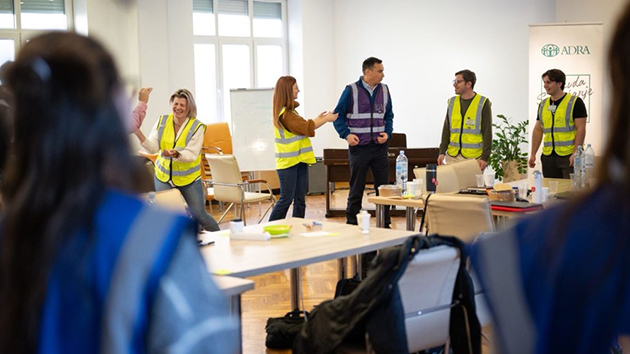
Participants travelled from 14 different ADRA offices and one Adventist Division office across Europe to join the training, hosted at the South-East European Union Conference office in Belgrade. Trainers from ADRA International, ADRA Europe, and ADRA Euro-Asia guided the group through a blend of theory and tabletop exercises that mirrored the chaos, decision-making, and coordination challenges of an unfolding disaster.
For Gabriel Villarreal, Regional Emergency Coordinator for ADRA Europe, the gathering was both timely and essential. “We have emergencies every year. And we are seeing that emergencies are coming more frequently. ADRA is called to be prepared to respond to emergencies. So this is very good to have a group of 24 people who are coming from 14 different ADRA offices in Europe that are committed to this. This is key to having other offices that are prepared and ready to respond to emergencies.”
The Core Emergency Response Training (CRT) structure allowed participants to practice using ADRA’s Emergency Response Management System, manage small humanitarian projects, apply global standards, coordinate with government partners, and mobilise local Adventist Church networks and volunteers. The simulated flood offered a safe environment to rehearse decisions that, in real emergencies, must be made quickly and with limited information.
For Vladimir Popovic, Project Coordinator at ADRA Serbia, the exercise reinforced both technical and ethical foundations. “It’s really valuable to remind ourselves that we need to respect basic humanitarian principles. We remind ourselves how important it is to be present in the field and understand the local context. As we saw, we can deploy a lot of people, but that first response in the first 48 hours is so important, and that bigger or bigger organisations cannot do without local support.” He added that ADRA’s local presence remains one of its strengths. “We can react immediately, and we understand the local context.”
Some participants came with limited emergency background and discovered how much structure already exists within ADRA. Michaela Šrubařová, Project and Finance Manager from ADRA Czechia, shared, “I didn’t know that ADRA has such great prepared materials because I was part of an emergency response only once. But I will definitely stress the structure, how it’s prepared, and also the thing that we should all know: what does it mean to be part of the emergency response?”
Others found answers to long-standing questions. Bert Seefeldt, Volunteer Coordinator from ADRA Germany, reflected on what the training clarified. “The training has helped me to understand the basic items of emergency response.” He noted that earlier in his career, he had to learn many lessons the hard way. “Many of the things we are discussing now I had to learn during a previous response, and I missed them also. I learned them afterwards, so that would have been actually a good help to get a little bit of understanding of what I have to look for.” Then he added with a smile, “Especially with the abbreviations, it took me a year to actually understand what the people were talking about.”
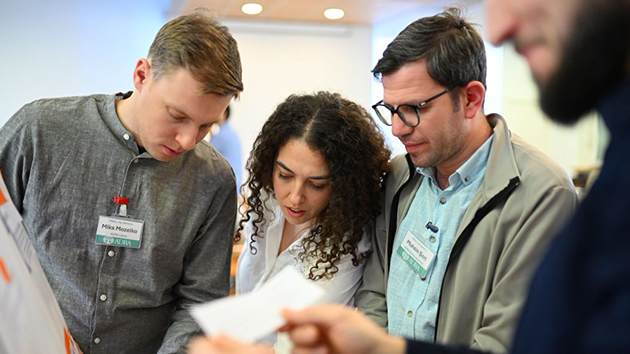
Beyond plans and procedures, the Core ERT week also created space to connect with colleagues across the region. For Šrubařová, this aspect was just as valuable. “The connections with people, I love being in the middle of the big groups, and also a lot of meeting new people, so it was really nice for me. I found a lot of people on the same wave here, so it was really nice, and I hope I will keep some of the contacts for the future.”
Popovic agreed. “It is so important that we can see each other from different offices, share our experiences, and based on that experience, we can accumulate and gain more and more knowledge and experience.”
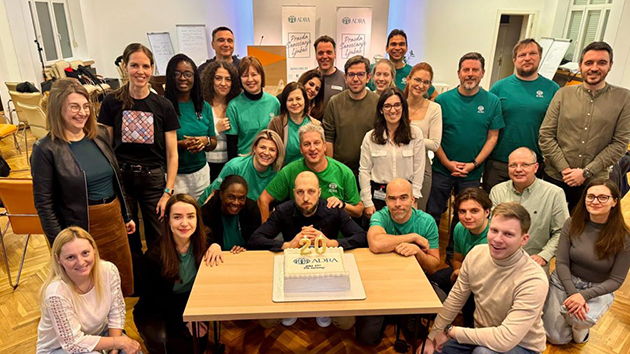
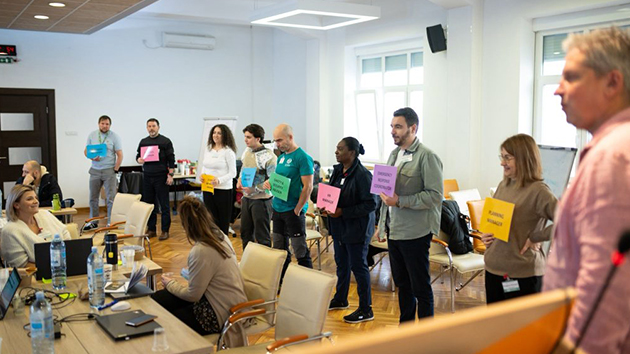
By the final day, which culminated in a graduation ceremony, dinner, and cake to commemorate the 20th anniversary of the ERT, the blue, yellow, red, and purple teams had transformed from strangers into capable, confident response groups. The exercise may have been staged, but the skills, readiness, and relationships it forged will endure, ready to be called upon in any real crises that lie ahead.
[Photos: Niky Stoykov]
The original version of this article was posted on the ADRA Europe website.